How to Use a Slip Lead: Fitting, Safety and Choosing One
- Buying Guide
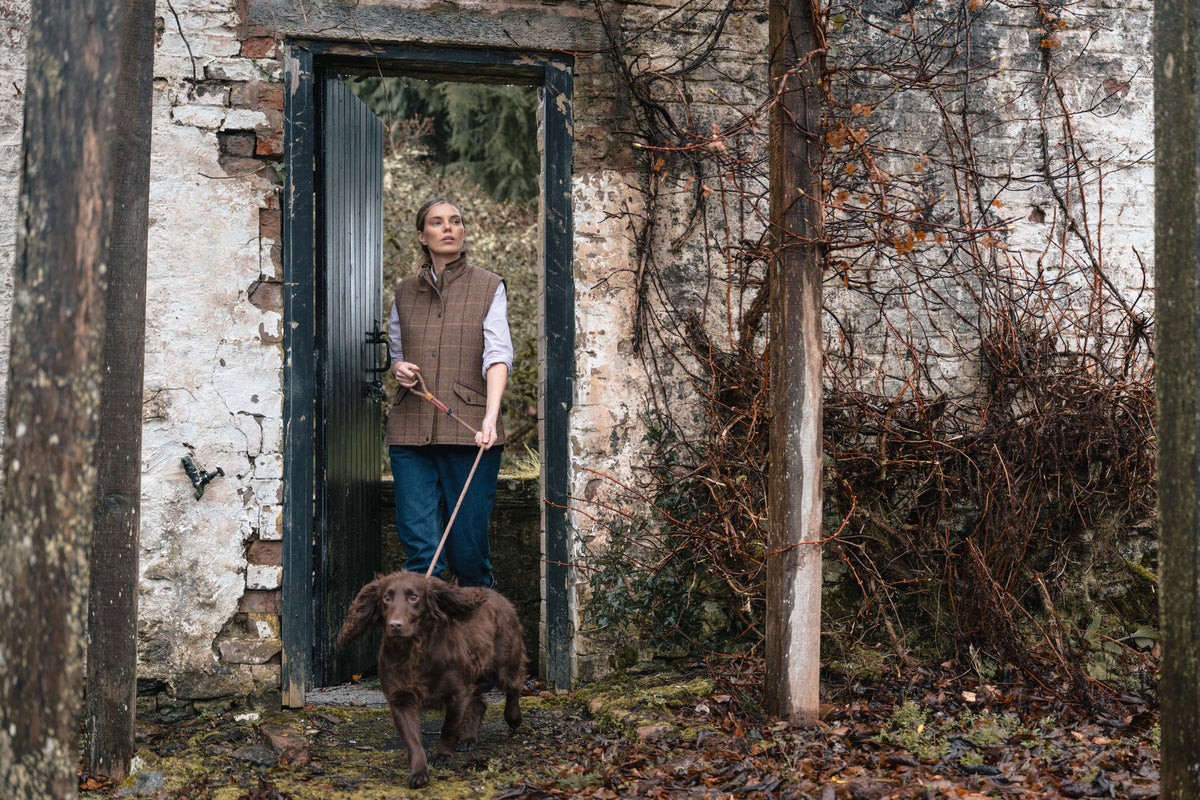
To use a slip lead, make a loop big enough to pass easily over your dog's head, slide it on so it sits high on the neck, then move the stopper down until you can fit two fingers between the rope and your dog's neck. Hold it with a loose, relaxed lead: the loop should tighten only for a moment if your dog surges ahead, and slacken again as soon as it stops pulling.
This guide is for gundog owners, pickers-up and everyday dog walkers who want to fit a slip lead properly, understand when it is the right tool, and choose between the rope slip leads we sell most of.
What is a slip lead?
A slip lead is a lead and collar in one piece of rope. One end runs through a ring to form an adjustable loop that goes over the dog's head, and a sliding stopper sets how large that loop can open. There is no clip and no buckle, which is why it is the standard lead on shoot days: you can slip it on or off a working dog in a second, and there is nothing to snag in cover or rattle at the peg.
Slip leads are by far the most popular leads in our shop. Over the last 90 days our five best-selling leads have all been rope slip leads, led by our own John Norris rope slip lead.

How do you put a slip lead on a dog correctly?
Fitting a slip lead takes a few seconds once you have done it a handful of times. The basic method below follows the University of Bristol's veterinary clinical skills guide, with a couple of our own checks added:
- Check the stopper moves. Slide it up and down before you start. A stopper that has seized cannot hold the loop at the right size.
- Open the loop. Make it just large enough to pass over your dog's head without catching the ears.
- Slip it over the head. Do it smoothly and calmly. Most dogs barely notice once they are used to it.
- Position it high on the neck. We suggest it sits just behind the ears and under the jaw, rather than low down near the shoulders where a dog can lean into it.
- Set the stopper. Slide it down towards the ring until the loop is snug but not tight. You should be able to place two fingers between the rope and your dog's neck.
- Check it releases. Give the lead some slack. The loop should loosen on its own. If it stays tight, take it off, turn it the other way round and try again.
To take it off, slide the stopper back towards the handle, open the loop and guide it gently over the head. You can find the step-by-step original in the University of Bristol guide to using a slip lead.
How do you walk a dog on a slip lead?
Walk with the lead loose. A slip lead works on a brief tighten and release: if your dog surges, the loop closes slightly, and the moment your dog comes back beside you the pressure goes. That release is what teaches the dog where to be. Constant tension does the opposite and simply leaves your dog pulling against its own neck.
A few habits help:
- Hold the lead in the hand furthest from your dog, with a little slack hanging between you.
- If your dog pulls, stop or change direction rather than hauling it back.
- Reward a loose lead with praise or a treat at your side, where you want your dog to walk.
- Keep sessions short with young dogs and build up, as you would with any lead training.
If you are working on steadiness and heelwork through the quieter months, our guide to off-season gundog training with Dog and Field covers the kit and routines that go with it.
When is a slip lead the right choice?
A slip lead earns its place whenever you need to get a lead on and off quickly, and when your dog already walks reasonably well beside you. That covers most shooting and working situations:
- Shoot days. Guns, beaters and pickers-up can slip a dog off to work and back on again between drives in seconds. If you are new to beating, our beginner's guide to shoot beating explains how the day runs.
- Loading and unloading. Getting a wet dog in and out of the truck or a dog box is quicker with nothing to clip.
- Training. Slip leads are the usual choice at field trials and working tests, which is why leads such as the Dog and Field Pro Trialler are designed with competition handlers in mind.
- A spare in the pocket. A rope slip lead rolls up small, so it is worth carrying one on any walk for the moment you need to put a lead on a loose dog.
There are also times it is the wrong tool. A dog that pulls hard and constantly, a young puppy that has not yet learned to walk on a lead, or a dog with a delicate neck or breathing problems is usually better on a harness or a halter lead while you work on lead manners.
Are slip leads cruel?
No, a slip lead is not cruel when it is fitted correctly and used with a loose lead. Most of the concern comes from misuse: a loop left too large or too low, no stopper set, or a dog allowed to pull against it for the whole walk. Fitted with the two-finger check and used with a light hand, a slip lead puts pressure on the neck only for a moment when the dog moves out of position.
The RSPCA's 2012 good practice guide to handling dogs, written for professional handlers, describes a slip lead as an effective and simple way to bring a dog under control, and says it should always be kept in good condition to prevent risk of injury. So check your lead regularly for fraying and a worn stopper, and replace it before it fails.
If your dog pulls hard enough that the lead is tight most of the time, switch to something that takes the pressure off the neck while you train. The Dog and Field Figure 8 halter rope lead combines lead and collar with an anti-pull design, and a step-in harness such as the Barbour wax step-in dog harness spreads the load across the chest. That harness comes in three sizes, from a 35cm to a 56cm chest, so measure your dog before you order.

Which slip lead should you buy?
The main differences between slip leads are rope thickness, length and the type of stopper. Thinner rope is lighter and less bulky in a pocket. Thicker, softer rope is easier on your hands and spreads the contact over a wider area of your dog's neck. Here is how the slip leads we would point most people towards compare, using the makers' own specifications:
| Slip lead | Rope | Length | Stopper | Best for |
|---|---|---|---|---|
| John Norris rope slip lead | 10mm soft rope | 1.55m (64in) | Sliding stopper | Everyday walking and a spare for the truck or coat pocket |
| Jack Pyke slip lead in orange | 10mm soft braided nylon | 1.5m | Sliding leather stopper | Shoot days, where the bright colour is easy to spot if you drop it |
| Dog and Field Pro Trialler slip lead | 5mm English braid | 1.2m | Button press sliding stopper, stainless rope thimble | Training and trialling, where a light, slim lead matters |
| Dog and Field Pro Trialler swivel lead | 5mm English braid | 1.2m | Button press stopper, anti-twist swivel | Busy dogs that spin and turn, which tangles an ordinary lead |
| Dog and Field Woven Lux slip lead | 12mm soft woven fabric | 1.2m | Leather bindings, solid brass rings | Owners who want a softer, smarter lead for everyday walks |
If you only buy one, our own rope slip lead is the one most of our customers choose, and at its price it makes sense to keep one in the truck, one in your shooting coat and one by the back door. For a dog you train or trial, the slimmer Dog and Field Pro Trialler is lighter in the hand. You can compare the full range in our dog leads collection.
Does my dog still need a collar with a slip lead?
In most cases, yes. In England, Scotland and Wales, the Control of Dogs Order 1992 says a dog on a highway or in a place of public resort must wear a collar with its owner's name and address on the collar or on a plate or badge attached to it. A slip lead does not count as that collar, because it comes off whenever the lead does. The order does set out exemptions, including dogs being used for sporting purposes, which covers a gundog while it is working on a shoot. For everyday walks, keep a properly tagged collar on underneath. Our guide to keeping dogs safe with collars and accessories has more on choosing one.
One more safety point: never leave a slip lead on a dog that is unsupervised or tied up, as the loop can tighten if the dog pulls or gets caught.
Frequently asked questions
Can you use a slip lead on a puppy?
You can, but it is rarely the best place to start. A young puppy that has not learned to walk on a lead tends to pull and twist, so it is usually better on a soft collar or harness first, with a slip lead introduced once it walks reasonably well beside you.
Are slip leads good for dogs that pull?
Not on their own. A slip lead suits a dog that mostly walks on a loose lead and needs the odd correction. For a dog that pulls constantly, a halter lead or harness takes the pressure off the neck while you train better lead manners.
How tight should a slip lead be?
Snug but not tight. Set the stopper so you can fit two fingers between the rope and your dog's neck, and check the loop loosens again when you give slack.
What length of slip lead is best?
Around 1.2m suits training and trialling, where you want the dog close and the lead light. Around 1.5m gives a little more room for everyday walking and for taller handlers with smaller dogs.
Why is my slip lead not loosening?
It is usually on the wrong way round, or the stopper is jammed against the loop. Take it off, turn it over and refit it, and make sure the stopper slides freely.
Get the right lead for your dog
A good slip lead costs little and lasts for seasons if you look after it. Browse our Dog and Field leads and slip leads, and if you are still deciding which breed suits your shooting, read our guide to the best gundog breeds. For advice on fit or which lead suits your dog, call us on 01768 864211 or visit the shop in Penrith. Dogs are always welcome.
Written by the John Norris of Penrith team. Published November 2026.