How to Choose a Shooting Jacket for Pheasant Season
- Country Clothing
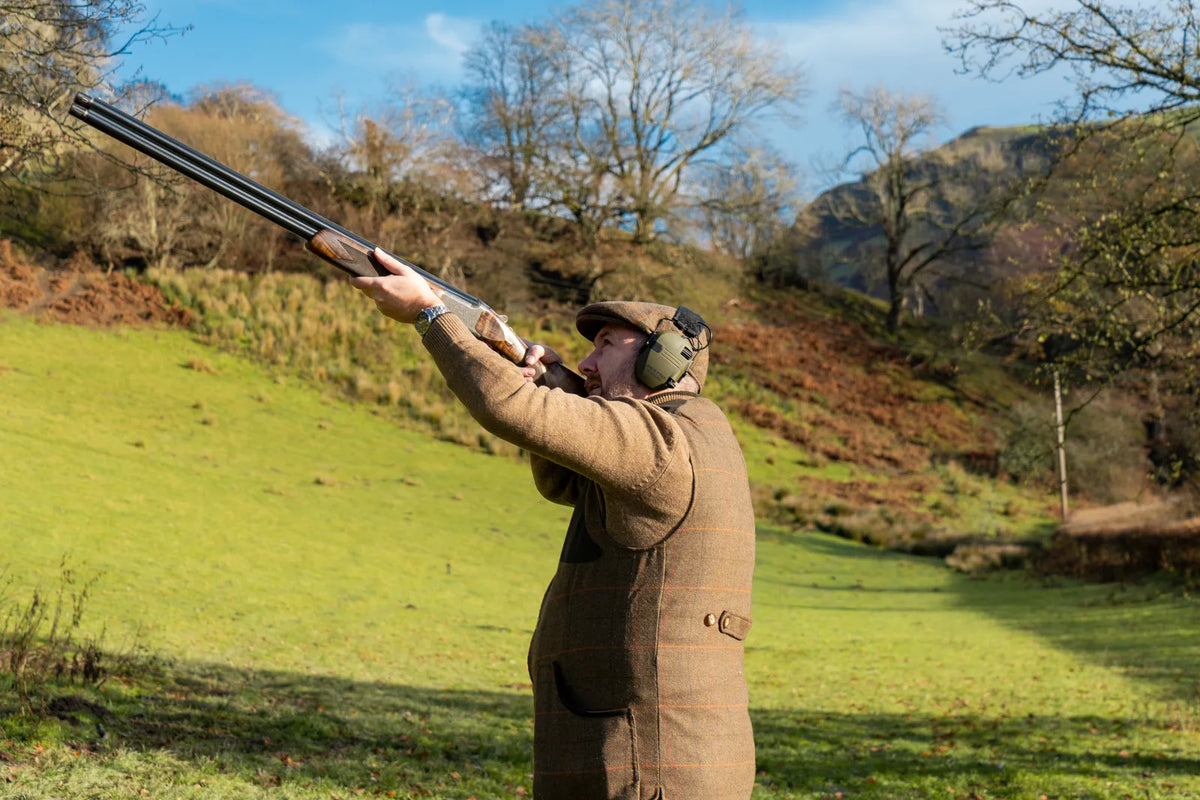
The right shooting jacket for pheasant season needs to work through a long, changeable day rather than simply look appropriate at the meet. Early season cover can be wet, a drive can be still and cold, and a walk back to the vehicles can be warm enough to make a heavily insulated coat feel cumbersome. The aim is a quiet, practical outer layer that leaves room for the clothing beneath it and does not get in the way when it matters. BASC lists pheasant season as running from 1 October to 1 February in England, Wales and Scotland, so late October is a sensible time to reassess the layer that sits over your shooting shirt, knitwear or gilet. BASC’s shooting-season guidance gives the country-specific dates.
A good choice begins with the sort of day you attend and the role you play. A standing Gun, a beater, a picker-up and a keeper can all encounter the same weather but have different priorities. The following points will help you narrow down a shooting jacket without treating one style as right for every day.
Choosing a shooting jacket for pheasant season: start with the job
Before comparing fabrics or pocket layouts, think about how you will use the jacket. If you are mostly standing on an exposed peg, a dependable weather barrier, a collar that closes neatly and enough room for a warm mid-layer may matter most. If you walk between drives, work dogs or cover ground in cover crops, lower bulk and good freedom across the shoulders become more important. A jacket that feels generous enough in the shop can still prove restrictive when worn over the layers you use on a cold morning.
It is worth trying the jacket on with that realistic combination. Start with a shooting shirt for pheasant season, then add the knitwear or gilet you normally reach for. Raise your arms, turn your upper body and make a few unhurried gun-mount movements with a safe, unloaded gun or a suitable fitting aid. You are checking that the back does not pull, the collar does not crowd your cheek and the sleeve length remains sensible. A little extra body length can be welcome in rain, but a hem that catches when you sit or stride through cover is less helpful.
For a fuller view of building the layers underneath, see our shooting layering guide for Guns, beaters and pickers-up. The outer layer should complement that system, not attempt to do every job on its own.
Match weather protection to the forecast and ground
October weather is rarely settled for long. A fully waterproof shooting coat can be useful for sustained rain, wet hedgerows and a damp vehicle-to-peg walk. On a drier but windy day, a quieter, less bulky jacket may be more comfortable, especially where you expect to move regularly. The useful question is not whether a jacket is labelled waterproof, but how much time you expect to spend in rain or in contact with wet vegetation.
Look beyond the headline fabric claim. A protective outer works better when its collar, cuffs and hood can be adjusted to close gaps without limiting movement. Handwarmer pockets can make a noticeable difference while waiting for a drive, while roomy lower pockets should remain accessible when the front is closed. A detachable or stowable hood is a practical option for some, but it is worth checking that it sits comfortably when not in use and does not interfere with your collar.
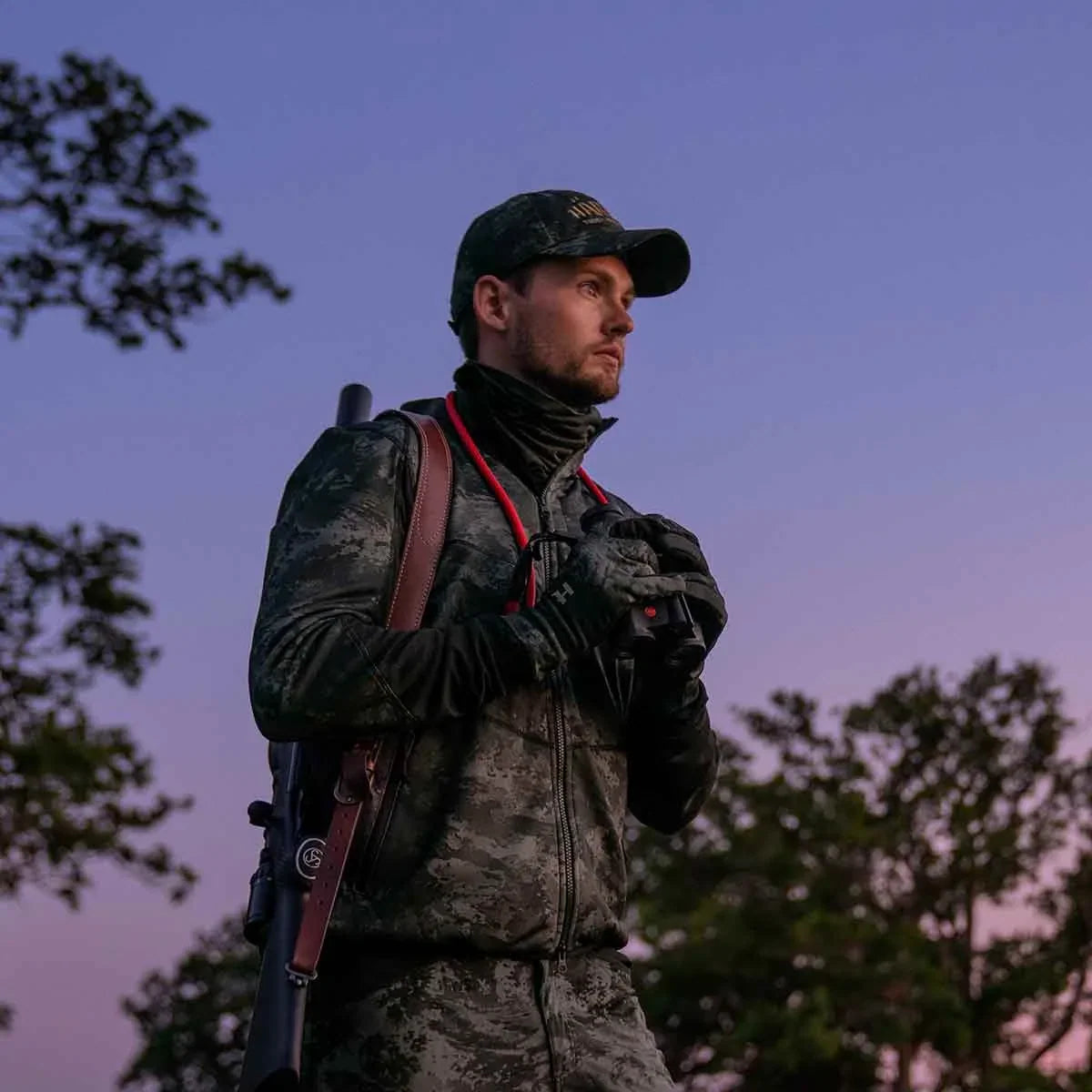
The Harkila Pro Hunter Shooting GTX Jacket is an example of a more substantial field layer. Its product page lists an Airtech outer, GORE-TEX membrane, detachable hood, adjustable cuffs and handwarmer pockets. For a technical alternative, the Harkila Orton Tech HWS Jacket lists a laminated outer with HWS membrane, adjustable packable hood, handwarmer pockets and front pockets with quick-load straps. Compare the features with the conditions you expect rather than assuming that more protection is always more useful.
If your days often overlap with walking, dog work or wetter country pursuits, our guide to waterproof outdoor clothing for early autumn offers further thoughts on keeping a flexible system for changing conditions.
Prioritise fit at the shoulders, cuffs and hem
The cut of a shooting jacket is central to its usefulness. Too close across the shoulders and upper back, it can pull as you mount or reach. Too loose through the body, it can leave gaps at the cuffs and collar, snag in brambles or make pocket contents swing about. A well-chosen jacket should allow the movement you need over your intended layers without feeling baggy when you are walking in from the field.
Pay particular attention to three areas:
- Shoulders and upper back: there should be enough reach for natural movement without a tight point across the shoulder blades.
- Cuffs: adjustable cuffs help close the sleeve around gloves or shirt cuffs on wet days. Check that they still sit comfortably when you bend your elbow.
- Hem and back length: sufficient coverage matters when standing in rain or brushing past wet cover, but test that the hem does not ride up or impede your stride.
A jacket does not need to be loose to accommodate a thin base layer and a light insulating layer. Conversely, if you routinely wear heavier knitwear in December, allow for that when trying a coat in October. Size guides are useful starting points, but a real try-on with your usual layers remains the better test.

Think through pockets, closures and the small field details
On a shoot day, the practical details are often the ones you notice first. A two-way front zip can make sitting in a vehicle or stepping over a gate more comfortable. Large front pockets need to be useful without leaving the front of the coat awkwardly weighted. Handwarmer pockets should sit where you can use them without disturbing the jacket’s main closure. A robust front fastening and a collar that can close against a breeze are worth assessing before looking at decorative details.
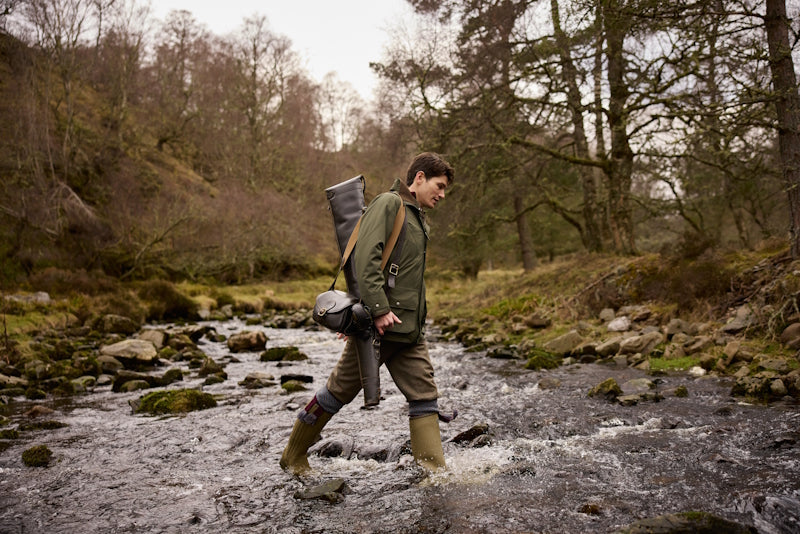
The Deerhunter Gamekeeper Shooting Jacket is worth considering where freedom of movement is high on the list. Its product page identifies stretchy waterproof material, shoulder protection and spacious front pockets. The Schoffel Ptarmigan Evo Coat is a waterproof shoot-day coat with a more traditional coat format. They illustrate two different ways to approach the same decision: one with a more flexible technical feel, the other with the longer coverage of a shooting coat.
Do not let the pocket count decide the purchase on its own. Consider what you carry, whether the pockets are easy to reach while wearing a waistcoat or gilet, and whether the closures are straightforward in cold or wet conditions. Leaving the jacket lightly loaded also helps it sit better and move more naturally.
Build the jacket into the rest of your shooting clothing
A shooting jacket is only one part of the outfit. A breathable shirt next to the skin, a removable insulating layer and the right outer jacket make it easier to adjust when the temperature changes. On a milder day, you may only need a shirt and a light jacket. On a cold, wet day, the jacket needs enough room to sit properly over a gilet or knitwear without compressing those layers or restricting your arms.
The same principle applies below the waist. A shorter jacket can suit active days and work neatly with pheasant shooting trousers, while a longer coat may suit prolonged rain or more stationary shooting. Footwear, gloves and headwear should be considered at the same time. If the whole system is planned together, you are less likely to rely on one overly heavy garment for every condition.
There is no need to buy for the harshest day you might ever encounter if most of your shooting is in moderate weather. A lighter, well-cut jacket that you can layer beneath can be the more adaptable choice. Equally, if you regularly stand in driving rain or work through wet cover, a purpose-built waterproof coat may justify its extra protection and length.

A practical fitting checklist before you choose
Before settling on a shooting jacket, work through this short check:
- Wear the shirt and mid-layer you are most likely to use.
- Close the jacket fully and check the collar, cuff and hem adjustments.
- Move your shoulders and arms as you would in the field, without forcing the garment.
- Walk, sit and step up as if getting into a vehicle or crossing a gate.
- Check the pockets with the jacket closed and with your normal layers underneath.
- Consider the forecast, the cover and your role on the day rather than choosing by appearance alone.
Product pages, colour options and size availability can change, so check the individual product page before making a final choice. If you are deciding between cuts, bringing the layers you normally wear to try on with the jacket can make the difference clearer.
Frequently asked questions
Should a shooting jacket be waterproof?
Not always. A waterproof coat is particularly useful for persistent rain, wet vegetation and long periods outside, but a lighter field jacket may be more suitable for dry or more active days. Choose according to the forecast, the ground and the time you expect to spend exposed to the weather.
How should a shooting jacket fit across the shoulders?
It should allow natural movement with your usual layers underneath, without pulling across the upper back or feeling excessively loose. Check the fit while moving your arms and making a safe, unhurried gun-mount movement, rather than judging it only while standing still.
Is a longer shooting coat better than a shorter jacket?
Neither is automatically better. A longer coat can offer more coverage in wet weather and while standing at a peg, whereas a shorter jacket may feel easier for walking, working dogs or moving through cover. Your usual role and conditions should guide the choice.
What should I wear under a shooting jacket in October?
Begin with a comfortable shooting shirt, then add a removable gilet or knitwear layer if the forecast calls for it. Leave enough room in the jacket for that combination, while avoiding so much bulk that movement at the shoulders and elbows is restricted.
Choose for the days you actually shoot
The most useful shooting jacket is the one that fits your usual layers, your role and the conditions you genuinely expect to meet. Start with movement and fit, then decide how much weather protection, length and pocket capacity are worthwhile for your days in the field. Browse our current shooting clothing alongside the product pages above, and always recheck the forecast and individual size details before you set out.