Beat the Heat
- Fly Fishing
By Paul Procter, John Norris Pro Guide
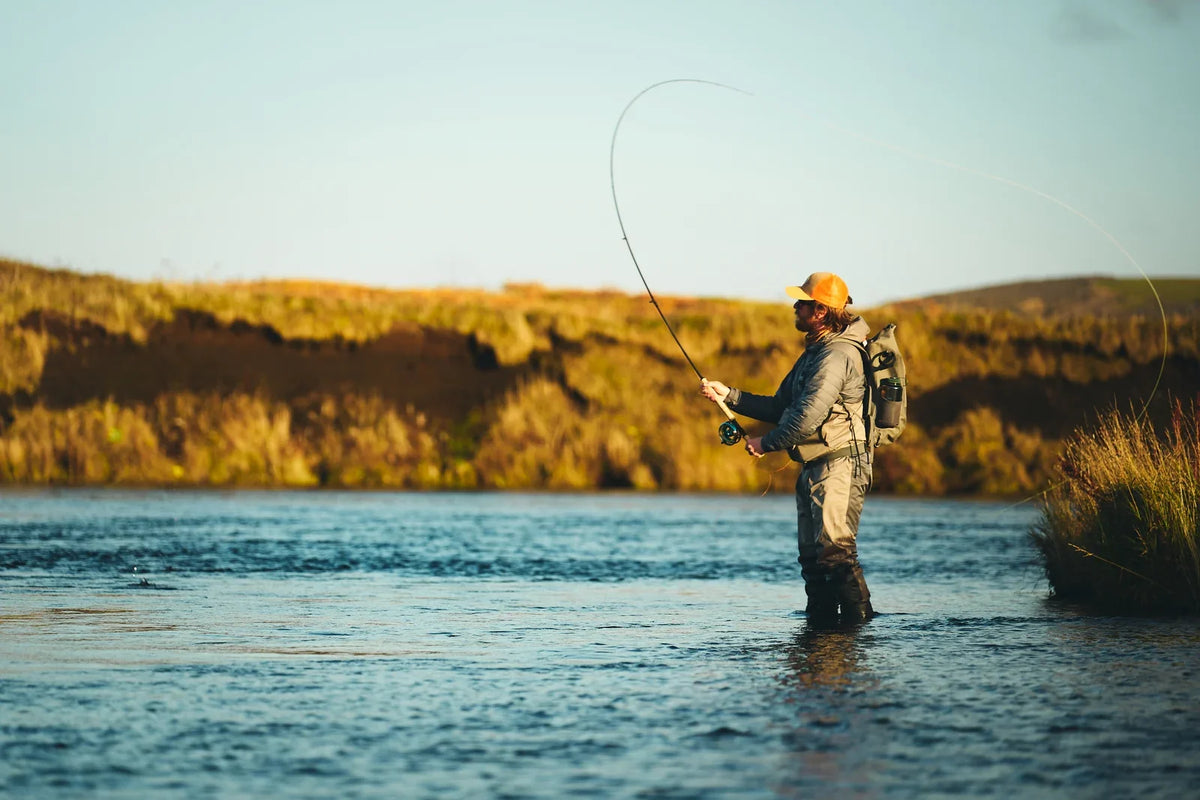
We’re currently enduring something of a heatwave here in the UK. Naturally, we all want to continue fishing where allowed. To get the best out of the weather, our resident guide Paul Procter offers some valuable pointers.
Carry a thermometer
Fish welfare should be at the forefront of our minds and it’s thought that once water temperatures exceed 18°C, salmonids become that bit more susceptible. Make sure you take the water temperature before fishing. If the reading is above 18°C, think twice. For me personally, I cease fishing at 19°C and above. Cling Temperature Tape Stick-On Thermometer Celsius

The early bird
Early mornings aren’t everyone’s idea of fun, but dragging yourself out of bed with the sparrows is well worth the effort. This could be as early as 4am. First up, you’ll probably have the whole water to yourself. Secondly, left undisturbed all night, trout are often found in the margins of both stillwaters and rivers. Hot weather affects fly life too, which tends to hatch at first light or last knockings. With luck, it’s possible to catch a couple of trout and be back home for breakfast or work.
Use unweighted nymphs
Shrunken rivers and depleted reservoirs mean shallower water in general. What’s more, especially when bank fishing, weed growth can be rampant and any fly that sinks quickly is bound to snag either weed or the substrate. Lightweight nymphs like an unweighted PTN or Hare’s Ear not only fish above such obstructions, but land like thistledown so seldom alarm trout, unlike a heavier nymph. Browse trout nymphs.

Approach with caution
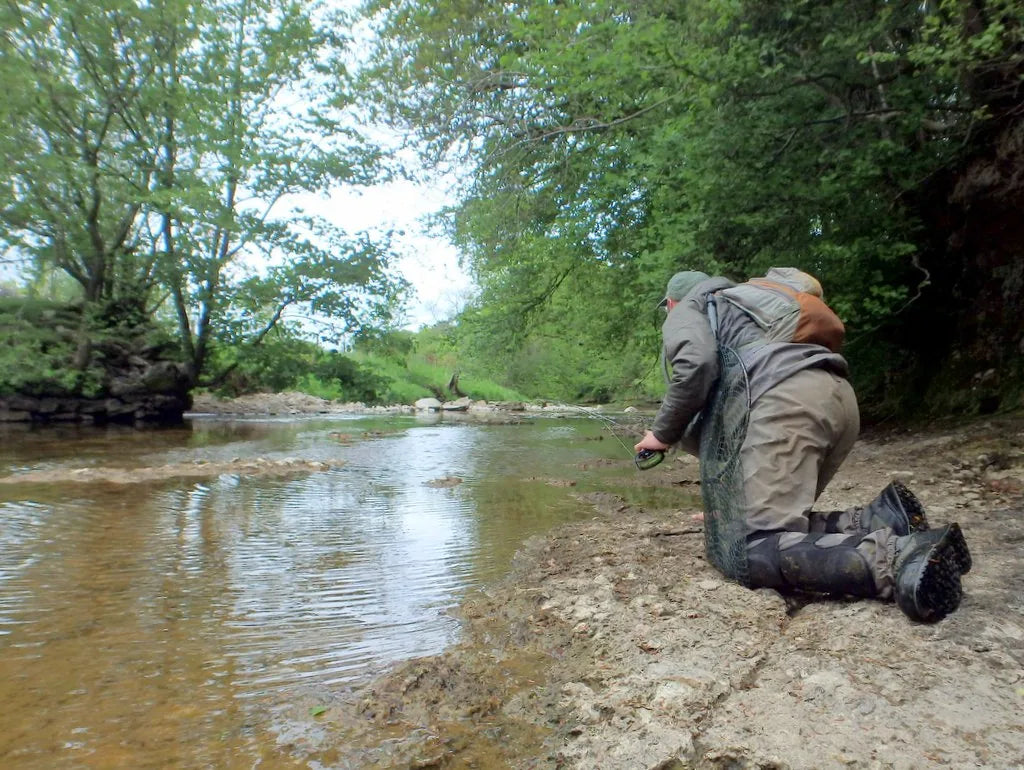
In their excitement, newcomers can be forgiven for approaching the water like a bull at a gate. Dashing around bolt upright, they inadvertently push trout away from the margins. Even stillwaters can be intimate places where our presence can easily alarm fish. With that, aim to keep below the horizon, move slowly and, if wading is necessary, avoid pushing a bow wave of water ahead of you, which only sends out warning signals to trout.
Keeping your profile small by crouching means you’re less likely to be detected by wary trout.
Go light
Not so long ago a 5-weight rod was considered the norm for river trouting and perhaps a 7-weight for stillwater fishing. My usual outfit for river fishing is the Guideline LPX Tactical 9’9” 3-weight, which has the finesse for low water, yet possesses backbone to boss headstrong trout. With regard to small stillwaters, a 10ft 5-weight should keep you in business and, for larger lakes or reservoirs, a 6-weight often gives you the edge. Browse our single-handed fly rods.
Think of tippet diameter
I’m very much of the school that ‘fish as heavy as conditions allow’. However, when faced with low water and the prospect of smaller flies, one should think of a more refined tippet. With regards to rivers, 0.13mm, approximately 6X, gives you enough strength, yet is fine enough for smaller imitations to behave naturally. On small stillwaters that aren’t choked with weed then 0.15mm, approximately 5X, is a great compromise. Mind, this will need stepping up if weed growth is rampant. For larger stillwaters, or when nymphing, 0.16–0.17mm, approximately 4X, will give you peace of mind. Explore leaders, tippets and braids.

Use longer casts
As a rule, casts of three rod lengths should be your maxim when tackling flowing water. Even on small stillwaters, or around the edges of undisturbed reservoirs, when the wind blows trout are often found pretty much under your feet. However, low clear water and still conditions make it difficult for us to hide our intentions. Now, longer casts will give you an edge, especially when coupled with tapered leaders of 12ft or so that are further extended with a length of tippet material. Guideline Power Strike Pro Tapered Nylon Standard Leader 12ft

Rely on indicators
Longer casts are fine when using dry flies, as we’re able to see the moment a fish accepts our imitation and act accordingly. Yet, when nymphing at range, takes are challenging to detect. Now, we should look to attaching some sort of indicator to our leader which helps determine not only our fly’s whereabouts, but whether a trout has seized it.
There are all sorts of indicators out there that have worth, but for low-water situations a humble tuft of brightly coloured yarn works well. Not only does this land without any distinct plop, it’s far less intrusive and therefore goes unnoticed. Browse fishing indicators and tippet rings.
Use a single fly
It’s easy to get sucked into the ‘team of flies’ syndrome when apparently if you’re not using at least two flies, you’re not fishing correctly. Admittedly, a trio of loch-style wets work as a team, but sometimes a single fly wins hands down. Firstly, it’s less intrusive, especially on pressured fisheries and secondly the odds of fouling algae or weed are vastly reduced when using a single fly.
Head for the shade
Whilst trout are predators, they are also prey to other creatures. Given this, they prefer to feed where a degree of cover exists. A stand of trees along a river, or on the banks of a tarn, provides shady areas that appeal to fish. The knock-on effect is that such trees are home to a host of terrestrials, like beetles, ants and greenflies, all of which can easily lose a foothold to tumble to the water. Given food and cover, this provides fish with the best of both worlds, which feel safe enough to feed even under a midday sun.

Use knee pads
As discussed earlier, our upright posture often has a negative effect on fish by warning them danger is imminent. Crouching down and sneaking about on hands and knees might seem a bit dramatic, but I’ll guarantee you it will put more fish in your net. This Indian-style approach, though, is best done with knee and shin pads, which not only protect your legs from bruising, but also those expensive waders.
Don’t forget your polariods
Drought conditions render many spate rivers as clear as chalkstreams. The same can be said of stillwaters too, where algae doesn’t exist of course. Using a decent pair of polariods means we can locate fish by sight and actively stalk them. Granted, many of the fish you will find might appear to be sulking on the bottom, but every so often they will respond to a carefully presented nymph or dry fly. These are bonus fish that would have otherwise gone unnoticed. Browse our polarised sunglasses.
Stay late
The evening rise on warm summer nights is well documented in the annals of angling history. Be it a stillwater or river, there’s every likelihood that caddis flies, midges or olives begin emerging as the light fades. And you can guarantee trout won’t be far behind. Most anglers make the mistake of leaving the water early, as often any action doesn’t get going until it’s virtually dark. Sure, the action may be condensed into 30 minutes, or perhaps an hour if you’re lucky, but it’s often the best sport of the day. Oh, and don’t forget the head torch, which makes unhooking fish and changing flies child’s play in the gathering gloom.