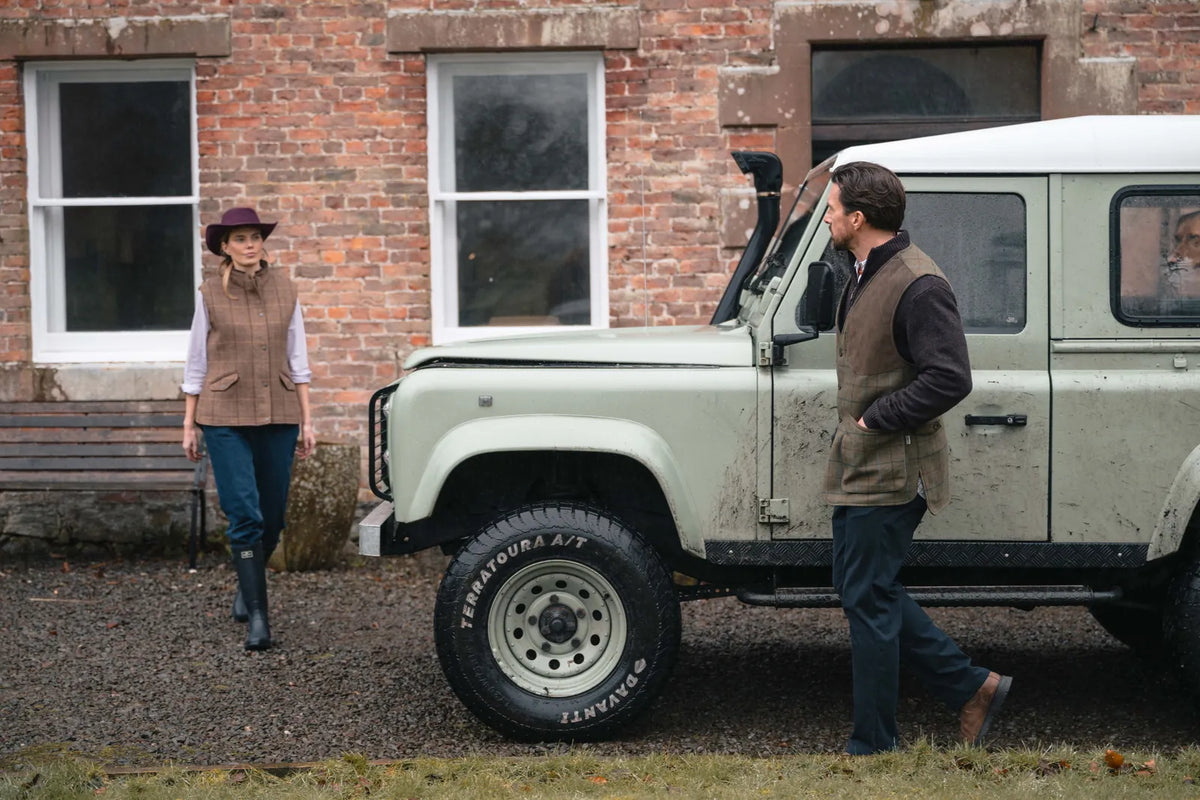
First Autumn Country Walks: How to Layer for Cool Starts and Changeable Weather
- Autumn
The first week of September is a useful point to revisit your walking kit. Meteorological autumn begins on 1 September, and with it come cooler starts, shorter days and a greater chance of unsettled conditions. Met Office autumn guidance is worth checking alongside the local forecast, but the practical question is usually simpler: what do you actually need to wear, and what is better carried until it is needed?
Good autumn country walking layers should let you move easily, stay comfortable through a cool start and cope with wet grass or a passing shower without turning a straightforward walk into a heavily laden expedition. The answer is rarely to put on every warm or waterproof item in the cupboard. It is to begin with the ground, the route and the length of time you expect to be out.

Start with the route, not the wardrobe
Before choosing a layer, decide what the walk is likely to involve. A dry estate track, a woodland path and a field-edge route after overnight rain all ask different things of your footwear and trousers. Think about distance, the amount of climbing, whether there are stiles or rough ground, and whether you will be stopping for lunch or standing about with the dog.
For a short walk on firm ground, a shirt and fleece gilet may be all that is required. For wet grass, muddy gateways or a route that includes a good deal of field walking, you may need waterproof footwear and an outer layer that can be put on when conditions change. It is a sensible habit to check the forecast before leaving, then pack for the less pleasant part of the day rather than dress for it from the first mile.
If you are replacing footwear this season, our earlier guide to choosing a walking boot covers fit, support and grip in more detail. The important thing is to wear the right type of footwear for the ground, not to assume that every country walk needs the same boot.
Build a base layer you can keep on
The layer next to your skin should be something you are happy to wear for the whole walk. A dependable shirt is often more useful than a bulky jumper at this time of year because it can work under a gilet, fleece or waterproof, and still feels comfortable once the temperature rises.
The Jack Pyke Countryman Shirt in Green Check is a straightforward example. Its polycotton fabric, chest pocket and button-down collar make it a practical country shirt rather than a specialist technical layer. That is often exactly what is wanted for an ordinary walk, particularly when you will be moving between the yard, vehicle and open ground.
A base layer does not have to do every job. Its role is to sit comfortably, allow you to add warmth when required and avoid unnecessary bulk beneath the next layer. If it is warm enough once you have settled into your walking pace, leave the heavier knitwear at home and take a lighter insulating option instead.

Use a gilet for adaptable warmth
A gilet earns its place on an early-autumn walk because it adds warmth around the body while leaving the arms free. That makes it a useful middle layer when the morning is cool but the route involves gates, dogs, a rucksack or plenty of movement. It is also easy to remove and carry once the day warms up.
For a more refined country layer, the Schoffel Ladies Lyndon Fleece Gilet in Navy is fast drying, machine washable and has two security zip pockets. Its fitted shape suits a woman who wants a smart layer for a country walk that may also include a stop in town or at the pub.
The Jack Pyke Countryman Fleece Gilet in Light Olive takes a more straightforward approach. It is made from 300g microfleece and has two zipped pockets with an adjustable hem. It is the sort of practical layer that can live in the back of the car and be pulled on when a walk starts cooler than expected.
The key is not to judge a gilet by how warm it feels while standing still indoors. Consider whether it will be easy to remove, whether the pockets are useful and whether it will sit comfortably over the shirt you actually intend to wear.
Choose boots or wellingtons for the ground underfoot
Footwear is where an autumn walking outfit is most likely to be either right or wrong. Walking boots are generally the better choice for a longer route with uneven ground, particularly when ankle support, a firm sole and a secure fit are priorities. Wellingtons come into their own where wet grass, puddles, mud and shallow water are likely to be a regular part of the route.
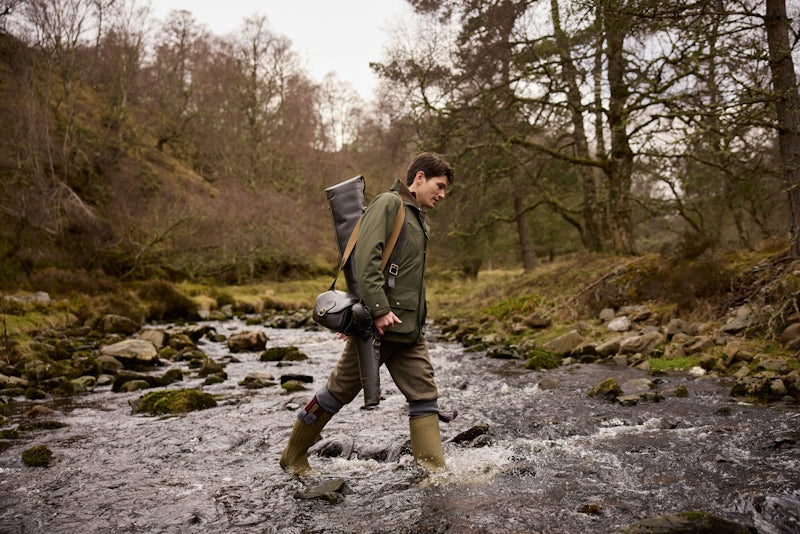
The Barbour Mens Tempest Neoprene Lined Wellington Boots in Olive have a rubber outer and sole, a neoprene lining and an adjustable leg. They make sense for a wet field-edge circuit, dog walking or a route that repeatedly crosses damp grass. They are not a replacement for a supportive walking boot on steep or stony ground, and it is worth being honest about that distinction before setting off.
For women who prefer a more structured tall wellington, the Le Chameau Ladies Vierzonord Neoprene Lined Boots use an adjustable waterproof gusset and a dual-density sole. They are built on a ladies-specific last, so they should be considered as a fit-specific option rather than a generic boot for every walker.
A good habit is to try country footwear later in the day, with the socks you expect to wear outside. Allow enough room for comfort without letting the heel move about, and walk around the shop or at home before committing them to a longer route. You can browse our wider country footwear range if the terrain calls for something different.

Carry weather protection rather than wearing it all day
Early autumn often rewards a lighter approach. If the forecast is broadly dry but the grass is likely to be wet, the right footwear may deal with the problem without the need for full waterproof trousers. If a shower is likely, a packable outer layer may be more useful than beginning the walk in a heavy jacket.
That does not mean ignoring wet conditions. It means matching protection to exposure. Keep a waterproof layer accessible, particularly when the route is open or the day includes a stop. If you know you will be walking through long grass or working around the estate as well as walking, an outer trouser can be the sensible addition. For general country clothing and accessories, our country clothing collection is a useful starting point.
The same principle applies to headwear and gloves. In September, these are often better carried than worn from the outset. A small amount of spare kit, packed where it is easy to reach, is generally more useful than leaving it in the car because it seemed unnecessary at breakfast.
A practical leaving-the-house check
Before you go, take a minute to put the outfit through a practical test. Can you walk comfortably at a steady pace? Can you add or remove the warm layer without reorganising everything? Is the footwear appropriate for the wettest section of the route? Have you packed water, a charged phone and the extra layer you will want when you stop?
For family walks, the same approach works well. Build the outfit around comfort and movement first, then add the country details that make it suitable for the setting. The aim is not to turn every walk into an expedition. It is to have enough in reserve that a wet gateway, a colder spell or a longer detour does not spoil the day.

Frequently asked questions
Should I wear a walking boot or a wellington for an autumn country walk?
Choose according to the ground. A walking boot is usually more appropriate for a longer route with uneven or stony sections, while a wellington is useful where wet grass, mud or puddles are likely to be the main challenge.
What is the most useful extra layer to carry in early autumn?
A fleece gilet is often the most adaptable option because it adds warmth without restricting arm movement and can be removed easily as the day warms up.
Do I need full waterproof trousers for every walk?
No. For a mainly dry route, suitable footwear and a readily available waterproof outer layer may be enough. Full waterproof trousers are more useful when you expect sustained rain, long wet grass or prolonged exposure.
How should I try on country footwear for walking?
Try footwear with the socks you will use outdoors, preferably later in the day. Check that the heel is secure, the toes have enough room and the fit remains comfortable while walking on an incline or uneven surface.
Keep the system simple
The most useful autumn country walking layers are the ones that suit the route, not the ones that promise to cover every possible condition. Begin with comfortable footwear, add a shirt that works all day, and use a gilet or outer layer to manage the temperature as it changes. With that simple system in place, you can enjoy the first autumn walks without feeling over-dressed at the gate or under-prepared by the time you reach the far field.
Browse our country clothing and country footwear to build a practical set of layers for the season ahead.
References
- Met Office, Autumn
- John Norris, The Ultimate Guide to Choosing the Perfect Walking Boot
- John Norris, Must-have Autumn Country Clothing for Women