
Buying Guides
Fly fishing guide: Our top tips
Fly fishing can seem overwhelming at first, which is exactly why we have compiled a beginners guide with some of our top tips on fly fishing – making fishing easier and more enjoyable with John Norris.
We also interviewed Glyn Freeman, a full-time, qualified AAPGAI fly-casting instructor and guide for John Norris, to share his best practices when it comes to expertly fly fishing…
Glyn Freeman’s top tips for fly fishing
Glyn’s passion for fishing and his level of expertise is clear, as he shares his words of advice for beginners looking to level-up their fly fishing techniques…
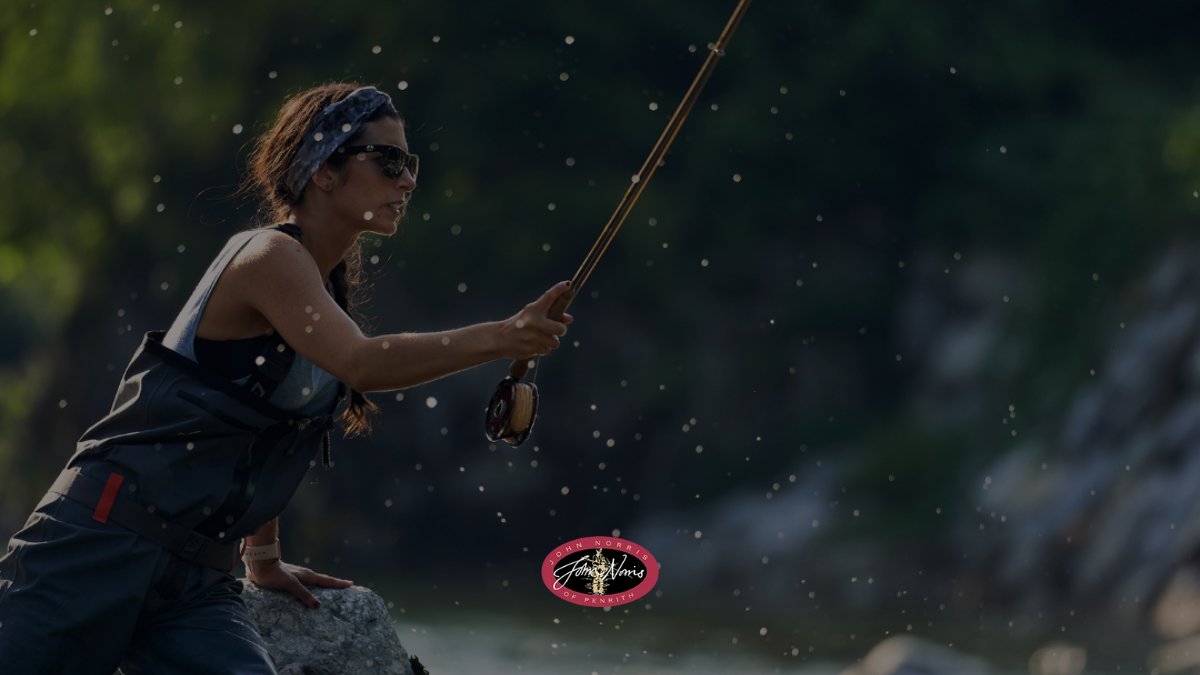
“Always use the appropriate Spey cast to suit the wind direction, too many anglers get hit by the fly or experience cross-over’s and tangles by not doing so. Fish the fly right into the dangle, it is surprising how many fish will follow a fly right across the river - far too often anglers will whip the fly away before a fish has committed.
The use of eye protection and other safety equipment like wading staffs and life jackets are a must. While wading, stay in your comfort zone and do not become another statistic! Also, fishing the fly for salmon at the correct depth, movement and speed is vital including the use of varying densities of sink tips, weights of fly and mends made for differing flows will achieve the ideal fishing depth, usually around 18 to 24 inches below the surface.
Lastly, get your fly casting and fishing skills up to speed before the season begins or prior to that trip of a lifetime abroad. Many days and opportunities are wasted on good water trying to get a fishable line out.”
Glyn takes keen anglers out on fly fishing experiences and offers tuition services for salmon and trout, on the beautiful River Eden throughout the year – click here to find out more information on his tuition.
Other factors affecting fly fishing
There are multiple factors that can contribute to the rate of success when fly fishing, this includes understanding fishing seasons and the UK’s somewhat temperamental weather, your angling skills and the equipment that you’re using…
Understand the seasons
Fly fishing in the UK can be affected by the seasons. During spring, aquatic insects and smaller fish become more active, while in summer, fish tend to seek cooler, deeper waters. In autumn, fish feed voraciously in preparation for winter. Winter can be a difficult time for fly fishing as fish are less active, and water temperatures can be too cold for insect activity.
Practice casting
As Glyn mentioned, casting can make or break your fly fishing experience. Practice your casting technique before heading out on the water. It's important to learn how to cast accurately and efficiently to get your fly where it needs to be.
If you're struggling, consider taking a casting lesson or seeking guidance from a more experienced angler – contact us for more information or advice on fly fishing.
Know your gear
The right gear can make a huge difference in fly fishing. The UK weather can be unpredictable, so it's essential to have the right clothing and equipment, including waders, boots, a good quality rod and reel, and the right line weight for the fish species you are targeting.
This doesn’t only go for clothing, but also for basic fly fishing equipment, you don’t need anything fancy as a beginner, but it’s important to get strong basics. The basics usually include a fly rod, a fly reel, fly fishing line (backing, a line, a leader and a tippet) and some good quality flies.
Choosing the right fishing fly can be difficult, but at John Norris we're helping to make it easier, so visit our store or get in touch if you need a helping hand with fly fishing tackle – it’s not as confusing as it may seem! A simple lot of quality gear is all you need, the basics above are perfect for beginners that want to dive straight into the deep end with fly fishing.
We understand that getting started with fly fishing can seem like an overwhelming process, which is exactly why our in-store experts are there to advise you on all fishing gear, tackle and clothing.
Visit our store or browse our Fishing Collection online.
How to catch trout
How to catch trout
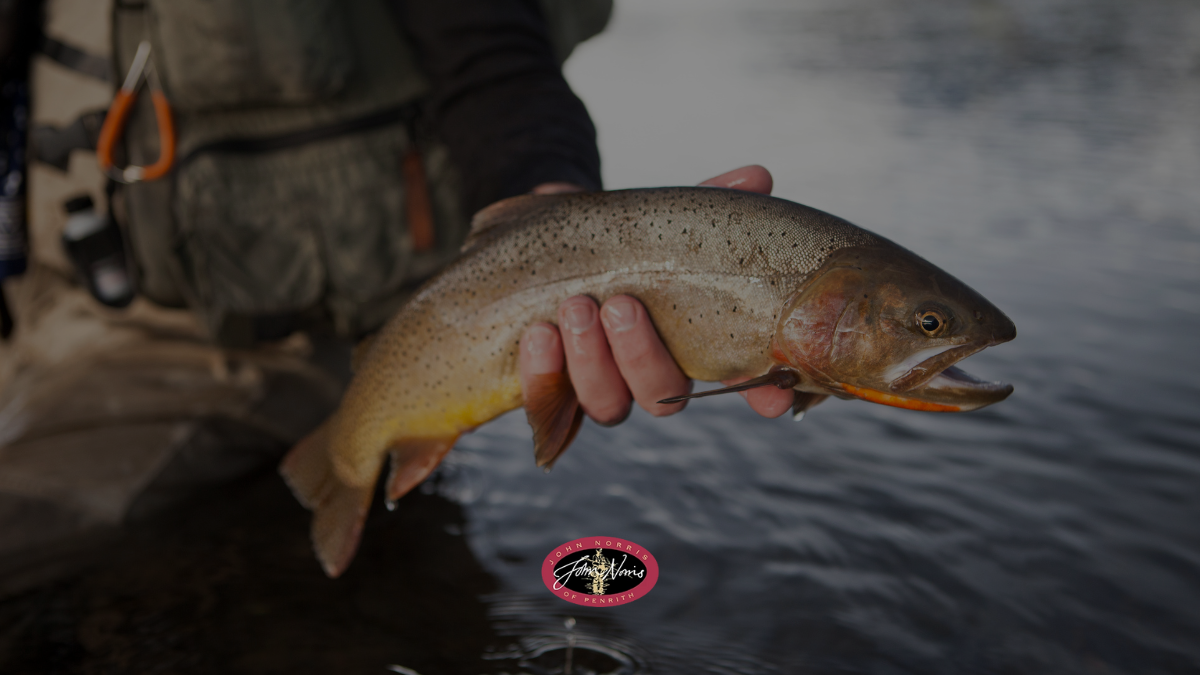
Trout is relatively abundant when it comes to angling in the UK’s lakes, and it is a great starting point for those interested in fly fishing wondering where to begin. Whether it’s wild trout or ‘trout fisheries’ – trout fishing is a popular pastime for many anglers around the world.
From rainbow trout to sea trout and other big fish, angling has become a key sport.
Here is our quick guide on how to catch trout and a few of our recommendations for trout fishing gear, although you can browse our full range of fishing tackle products here…
The history of trout fishing
Trout fishing has a long and rich history, dating back to ancient times. In fact, the first recorded mention of trout fishing dates back to the Roman Empire, where wealthy citizens would travel to mountain streams to catch wild trout. In medieval Europe, trout were highly prized for their delicate flavour and were often served at royal banquets.
However, it wasn't until the 19th century that trout fishing became a popular sport, thanks in part to the development of fly fishing techniques and the stocking of rivers and streams with hatchery-raised trout.
Today, trout fishing is a beloved pastime enjoyed by anglers around the world, with many enthusiasts practicing catch-and-release fishing to preserve wild trout populations for future generations – the UK is particularly keen on trout fishing as the 5-year mean (2016-2020) revealed over 20,000 sea trout were caught in England and Wales alone according to GOV.UK.
Where to fish for trout
The best places to fish for trout in the UK include rivers, lakes, and reservoirs. Scotland is known for its wild brown trout fishing, with the River Tweed being a popular location. The Lake District in England is also a great destination for trout fishing, with Windermere and Coniston Water being among the most famous lakes.
The Welsh countryside is home to many trout-filled rivers, including the Wye and Usk. Anglers can also find excellent trout fishing in Northern Ireland, with the River Mourne being a popular spot. In general, the best time to fish for trout is in the spring and autumn, when the water temperatures are cooler, and the fish are more active. Of course, there are also plenty of fisheries within the UK that are fortunate to have a consistent water supply, which will have cooler water all year round making it ideal for trout.
Fly fishing for trout
Fly fishing for trout usually begins on a relatively small stillwater – there are many lakes that are easily accessible throughout the country, and they are less intimidating for a beginner angler than a reservoir. Another added benefit to stillwater fly fishing is that the trout tackle needed to succeed is smaller than tackle needed for large water fishing.
Stillwater trout can vary in size, however, a large majority of their diet is made up of non-biting midgets, also known as chironomids. Other insets such as daddy longlegs, caddis, mayflies and even smaller fish can be used. Whether you’re after a ‘catch and release’ or ‘catch and keep’ approach, many fisheries often offer both options and are happy to accommodate, no matter how much experience (or lack of) you have.
Our angling experts are also available for a chat in store, offering advice on fly fishing and trout fishing specifically.
The best trout fishing tools
Fishing gear for trout can be relatively minimal in comparison to other species of fish, which can also make for a cheaper and more budget-friendly approach to a fishing trip for beginners. When it comes to the ideal rod, we usually recommend a medium-weight rod and a spinning reel, alongside a decent monofilament line and bait (trout aren’t usually picky eaters).
Here at John Norris, we have the largest selection of fishing tackle for fishermen everywhere. Our fishing tackle range includes fly fishing rods, fly reels, fishing bags, waders and boots, gadgets to help catch fish, boxes for fly fishing and so much more.
We also sell used fishing tackle, so the opportunities are endless. If you have just purchased a new rod and want rid of the old one, or perhaps you want to try your hand at fishing without having to invest so heavily in new equipment, then you are bound to find the solution right here at John Norris.
Browse our best fishing gear by clicking here, or visit us in store to take a closer look – we’ll be happy to assist!
Spring Salmon Fishing On The River Eden
The spring salmon season on the River Eden is certainly not for the faint of heart. Beginning on the 15th of January, when the country is still in the midst of winter, anglers brave the often freezing temperatures in order to find the first catch of the season. If you’d like to join them, the following explains everything you need to know.
About The River Eden Situated just over two thousand feet above sea level, the river Eden has a watershed of some two thousand square kilometres. It ranges from the Yorkshire Pennines to the fells of the Lake District, flowing in a northern, then westerly direction near to Carlisle and the Solway estuary. Over its one hundred and forty kilometre course, the Eden takes on board around sixty minor tributaries. Among these, the Eamont, the Lowther the Irthing, the Gelt and the Caldew are just a few. Trout and Grayling dominate the upper reaches, but it is not until the middle of the river, around the Lazonby area, that the serious salmon fishing really begins. Here you will find a steep gradient, with lots of different and interesting short pools to explore. Articles from famous trout fishers such as Lawrence Catlow and Paul Proctor have helped to portray an image of the Eden as being a small brook. Whilst this is true in some sections, particularly around the Kirkby Stephen, on the whole, the river is very deep and wide (up to 20-30 yards across in some places.)
Where is the best place to fish? The best spot to fish on the Eden is at Warwick Hall, where the river is joined by the Irthing, Caldew and Petteril. This makes it around thirty to forty five yards wide, whilst at the same time, remaining intimate and manageable. Competent casters should certainly have no difficulty. Temperature Temperature plays a vital role in Spring salmon fishing. It dictates everything from how deep and at what speed we should fish to which tackle should be used and obviously, what clothing worn. Temperature also has a large bearing on river conditions and will determine how far the salmon swim upstream.
What equipment will I need? You will need a double handed rod, of about 15 feet in length. Pair this with a large arbour reel and 150 yards of rot proof backing as well as a fast intermediate and a wet cell 2 type fly line, fitted with braided loops. The large arbor type of reel is the best choice because of its constant diameter, which means that you can guarantee accuracy in your casting. You will also need 15-20 pound breaking strain monofilament leaders of around 4-5 feet in length. Tie to this a double turle or single grinner fly, slowly wetted and tightened.
What should I wear? The first thing you will obviously need is a strong pair of fishing waders. We would recommend a 5mm neoprene pair with studs to ensure maximum grip and stability. Also recommended are a windproof fleece and a breathable, waterproof jacket to help you avoid the inevitable wet sleeves. Outside of this, a life jacket should be worn at all times and together with a wading staff, this will offer protection and peace of mind. To keep your hands warm, neoprene gloves with exposed finger and thumb will allow you to grip items with ease. By far the most important item you will need for salmon fishing is eye protection. In particularly, wrap-around sunglasses are ideal as these will offer complete protection from casting accidents.
Which flies should I use? The type of fly you should use is determined by several factors including speed, flow, depth and clarity of the river, along with its temperature. Make sure that your fishing flies are tied on sound hooks so they are not dragged off by a strong current. When fishing in deep waters, don’t make the mistake of using a fly that is too heavy. Whilst this will sink effectively, it will often fall deeper than the fish, which makes it ineffective. In colder temperatures, the fly needs to sink as near to the bottom as possible, without snagging. If the fly moves too fast through the water, then in cold water, salmon will rarely chase. The solution to this is to use a light fly such as an aluminium tube on a fast-sinking fly line.
A Beginners Guide To Sea Trout
Customer-Services DeptFishing for sea trout is a subject which is shrouded in mystery, with each angler seemingly having their own opinions on the subject. Each river has different sea trout, which have evolved and adapted to their environment. Therefore, a different approach to each river is needed. Some fishermen will tell you that sea trout will not feed when they enter fresh water, while others will give the opposite advice. Some prefer to fish at night as sea trout are more active and less spooky in the dark. Others will tell you that fishing during the day can be just as effective. The following will explain some of the factors you should take into consideration when fishing for sea trout.
Where to fish for sea trout England Tyne, Tamar, Wear, Tees Wales Towy, Dovey Scotland, Tweed, North & South Esk, Earn, Outer Hebrides.
When to fish for sea trout When deciding when you should start fishing for sea trout, it is important to remember that each river has its own conditions, which will have a bearing on your success. Local knowledge is, therefore, invaluable. Generally speaking, the end of May to September are when sea trout will come into our river systems with July Being the best month.
Fishing for sea trout at night As previously mentioned, night time is a great time to fish for sea trout. It is not, however, without its dangers. The first thing to remember when fishing at night is that you should be very familiar with the section you are wading in. A comprehensive reccy of the area during daylight hours will mean that you are familiar with conditions when you come back at night. You should also be aware of the tide timesJohn Norris of the river in question and the phases of the moon, which will both have an impact on water levels. Without your normal sense of sight, you will have to depend on other senses so it is important that you are able to cast accurately. Again, this is something you should look to get right during the day. Make sure that you are organised and have everything to hand, so that you are fully prepared. It may also be worth taking a companion for that added peace of mind. You will find at night that the sea trout will move out of the fast flowing streams and into the slow moving deeper pools.
What equipment will I need? Obviously, what you wear when sea trout fishing will largely depend on the conditions. In general, look for breathable materials such as Gore-Tex and footwear with felt and studs for added grip. A good brand to go for is Simms, which offers a range of products in these materials. For protection, wear a pair of clear safety glasses, together with a life jacket. Also bring a wading staff, a hat and insect repellent. If you are fishing at night, remember to bring two torches, one in your bag and the other on a lanyard around your neck.
What tackle will I need? In terms of tackle, go for a middle to tip action rod, around 10’ – 11’ in length with a line rating of 7-8. Pair this with a large arbor reel with 100 yards of backing and a weight forward floater, intermediate and fast sinking lines. Suitable flies for sea trout fishing are simple, slim and sleek. Low water irons between sizes 4 and 10 are ideal, together with Waddingtons or tubes of around 1.5"-2.5".
Salmon Fishing – Where do I go?
There is no shortage of advice on choosing tackle for salmon fishing and ample helpful instructors regarding techniques on how to catch salmon at different times of the year. But the big question, and the one most often asked, is “where do I go”. So let’s try and break it down.
If you can afford it Russia is the most prolific place for salmon. Weekly bags on the best rivers will run into hundreds of fish, shared perhaps by groups of 10 to 15 rods. On a good day a single rod could get 10 or more fish with individual weekly bags varying from 30 – 100.
Second would come Iceland which has the benefit of being closer with probably more predictable weather conditions and all without using Russian helicopters.
For big fish, Norway would be first choice with some rivers giving truly enormous fish. For those who do not want a long journey, or even the need to fly, Scotland and the north of England.
The main Scottish rivers are all East Coast and while the cost will be less than Russia the cost per fish will be higher as bags are much smaller. Availability is often dead men’s shoes as on many rivers the same parties fish the same beats on the same weeks year in year out and getting a slot may be difficult.
Often you have to take a less good week and hope your face fits so that you work up into a better period as vacancies occur. Now none of what I have mentioned so far is cheap – be it Russia, Iceland, Norway or a private beat in the north, but do not despair. The opportunity to fish some of the best rivers, even at the best times, is still there.
Most major rivers have at least one Association beat where you can get a day or a weekly permit. Sometimes you have to be staying in a hotel or a B&B in the town, but that apart there is normally no difficulty. Naturally you have the competition from locals – particularly when the conditions are good and fish are running – but as you get to know the water you are in with an equal chance as them. Just as an example.
The Spey has two or three Association stretches, the Tweed likewise as has the Tyne and all sorts of smaller rivers.
The staff in the John Norris shop will be able to help with a list of addresses and advice on the best times. Happy fishing – good luck and tight lines Barrie Welham
Autumn Salmon Fishing
Like most things in life, luck is a big part of being a successful salmon fisherman. However, having a good feel and experience of the environment in which you are fishing will dramatically improve your chances. Read on to learn some of what you need to know about how to successfully fish for salmon in the autumn.
Why is autumn a good time for salmon fishing? Unlike other times of the year, autumn is a reliable season for salmon fishing. This is due to the fact that the increased rain raises water levels, which in turn encourage fish to run into rivers and streams from the estuaries. Generally speaking, the equinox of late September is the catalyst for a change in the weather, lower temperatures with strong winds and increased rainfall causing water levels to rise dramatically. The scent of the water encourages salmon from around the coast to swim inland, into the rivers and streams of their birth, ready to be caught. As the river level begins to fall and clear again, we will see the first salmon run of autumn begin to appear, and what a magnificent sight it is to see salmon porpoising up the river.
Fresh run vs. gravid fish When fishing for autumn salmon, it is important to make the distinction between fresh run and gravid fish. Fresh run fish that have just arrived from the sea and are therefore of a higher quality, they are of silver colour and firm. Whereas gravid fish, who have been in freshwater for some time and starting to show their spawning livery have used a lot of energy developing eggs/milt and are less suitable for eating. Unfortunately, there is no way of knowing until you have caught the fish whether or not it is fresh run or gravid. The best thing to do if you catch a gravid fish is to simply release it again.
Fishing tackle for autumn salmon fishing Autumn fishing tackle is very similar to spring fishing tackle. You will need the following:
A double handed fishing rod of 14-16 feet, with a line rating of around 10
A fishing reel with 150 yards of rot proof backing
A fast and slow intermediate fly fishing line
A floater for sink tips of various densities and lengths, to be attached to a loop system or a multi-tip fly lineChoosing the right flies Successfully fishing for salmon involves experimenting with different patterns of fly. Most patterns will work effectively, however, it is how the fly is presented and fished effectively that counts. Getting the right fly for autumn salmon fishing depends on several factors, which include the flow and depth of the river. If you are fishing in a river with a heavy flow, you should use as fast, intermediate fly-line and a fly with a bit of impact. Go for bright colours, with black, orange and yellow hair wings tied on aluminium tubes and Waddington's of about three inches. Slower and clearer waters flies usually doubles around size 8 –12.
Casting If the condition of the river is high with colour in the autumn, fish will generally be swimming close to the bank, which is an easier route for them to take. Therefore, casting squarely across the river would be pointless. Casting in this manner will mean that before the fly has reached the required fishing depth, it will be swept away and travelling too fast by the sheer force of the current. It is much better to cast at a shallow angle, mend some and keep a few yards of slack. This means that the fly has a greater chance of reaching near the bottom of the river, pay plenty of attention to fishing the fly for longer on the dangle. Make sure to keep the rod at a right angle to the bank and the fly line under tension, as this will ensure that the line can be guided slowly back toward the bank. A good tip when the water height is a little lower and clearer is to take the normal one cast one pace down the pool, then throw a square cast every forth or fifth cast and strip, which will return quickly with the aid of the current. This will not only give the chance to attract fish that are at the normal level, but also those which may travel a little higher in the water.
Local knowledge Having knowledge of the river you are fishing and the surrounding area will help you to fish more effectively. For example, where the fish lie for a short and long period of time will depend on different water heights, knowing this will give you an advantage when fishing for autumn salmon.
Thanks to Glyn Freeman of Cumbria Fly Fishing for this useful article.